Site Welfare Units Cost UK: Buying vs Hiring for 12-Month Projects
TL;DR
For UK construction projects exceeding 12 months, purchasing a P600 modular welfare unit typically offers a lower total cost of ownership than hire. While hire offers low upfront costs, purchasing creates a relocatable asset with high resale value and superior thermal performance. Adacon's P600 system provides a premium, permanent-feel environment that improves site morale and reduces long-term operational spend.
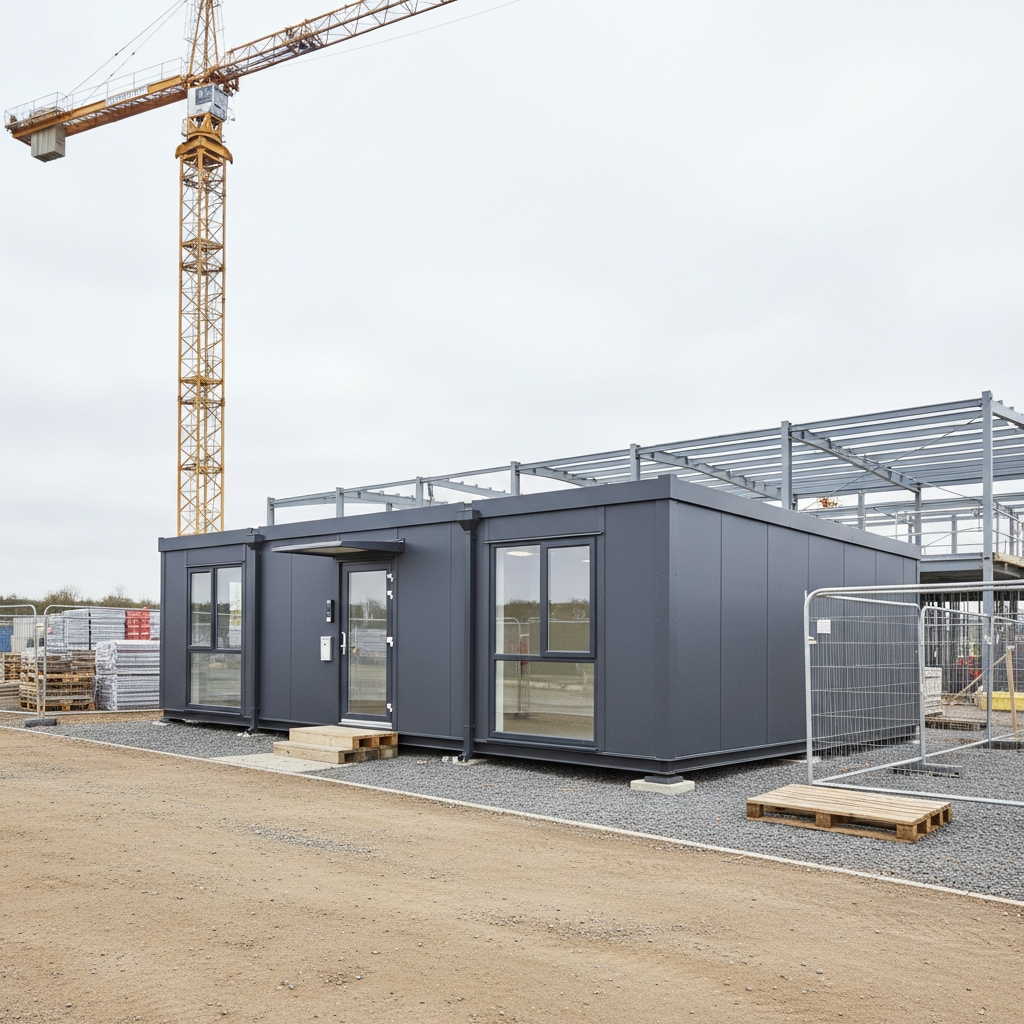
Deciding between purchasing or hiring site welfare units is a critical financial decision for UK construction managers and developers. For projects lasting 12 months or longer, the cumulative cost of hire often exceeds the capital expenditure required to own a superior asset. While traditional hire cabins are often viewed as a "plug-and-play" solution, the true cost of construction site accommodation extends far beyond the weekly invoice. Adacon provides the Adacon P600 modular buildings system—a high-specification, steel-framed alternative to the standard anti-vandal units commonly found on UK sites. Unlike converted containers, the P600 is a purpose-built modular system designed for thermal efficiency, staff comfort, and long-term relocatability across multiple project lifecycles.
The Commercial Dilemma: Capex vs Opex in Site Setup
The choice between Capital Expenditure (Capex) and Operational Expenditure (Opex) depends largely on the duration of the project and the company’s long-term pipeline. For a standard 13m² Site welfare units, weekly hire rates in the UK can range from £80 to £150, excluding delivery information, collection, and damage waivers. Over a 52-week project, a single unit can cost upwards of £6,000 in "dead money"—fees paid to a hire company with zero asset retention at the end of the term.
Purchasing a modular building shifts this expenditure into an asset. A P600 module typically requires a higher upfront investment, but it retains significant residual value. Furthermore, the tax implications are often favourable for UK businesses. Under the Annual Investment Allowance (AIA), many firms can deduct the full cost of plant and machinery, which often includes Modular buildings used for business purposes, from their profits before tax. When the project concludes, the unit can be dismantled and moved to the next site, effectively reducing the site setup cost of the second project to the price of transport and groundworks alone.
Standard HSE Requirements for UK Site Welfare
The Health and Safety Executive (HSE) sets strict legal obligations for site welfare under the Construction (Design and Management) Regulations 2015. Any site, regardless of size, must provide adequate facilities for workers. Adacon’s P600 system is engineered to not only meet but exceed these minimum standards, providing a professional environment that aids in staff retention and site morale.
- Sanitary Conveniences: Suitable and sufficient toilets must be provided, usually flushing and connected to a mains sewer where possible. They must be kept clean and well-lit.
- Washing Facilities: Must be located next to toilets and changing rooms. They must include hot and cold (or warm) running water, soap, and towels. The P600 system allows for high-specification shower blocks and vanity units that feel permanent rather than portable.
- Rest Rooms: Facilities for rest must include tables and chairs with backs, a means of boiling water, and a way to heat food. Our site canteens offer plastered and painted interiors that are far more comfortable than traditional cold-walled steel cabins.
- Changing Rooms and Lockers: Required if workers need to wear special clothing and cannot change elsewhere for reasons of health or propriety.
Crucially, the HSE mandates that welfare facilities must be adequately ventilated and heated. While many hire units struggle with condensation and heat loss, the P600’s fully insulated walls and roof ensure a stable climate year-round.
Breaking Down the Purchase Cost of a P600 Welfare Unit
When looking at site welfare units cost UK, it is vital to distinguish between a basic shell and a fully fitted module. A single P600 module provides approximately 13m² of floor space. Indicative pricing for a base P600 module starts in the region of £12,000 to £16,000 plus VAT, depending on the specific configuration of windows, doors, and cladding.
The final cost is influenced by the internal fit-out. A dedicated welfare module might include a partitioned WC compartment with a sink and water heater, a kitchenette with a worktop and sink, and heavy-duty laminate flooring. Adding these professional-grade utilities typically adds £2,000 to £4,500 to the module price. External cladding is another variable; while standard galvanised steel is available, many commercial clients opt for anthracite or timber-effect cladding to meet planning requirements or to match corporate branding. Delivery across the UK mainland and Northern Ireland is quoted per site, ensuring transparency in the final invoice.
The Hidden Costs of Welfare Hire
Hire invoices are rarely as simple as the headline weekly rate. Contractors often face a suite of "hidden" costs that can inflate the total budget by 20% or more. Damage waivers are standard, yet disputes over "fair wear and tear" at the end of a hire period are common, often resulting in significant restoration charges.
Furthermore, traditional anti-vandal cabins are notorious for poor thermal performance. In a UK winter, these units require high-wattage electric heaters running constantly to remain habitable. The energy cost of heating a poorly insulated 20ft hire cabin can be double that of an insulated P600 module. Over 12 months, this energy wastage represents a significant operational drain. Additionally, mobilisation and demobilisation fees (transport in and out) are charged for every hire, whereas a purchased unit only incurs transport costs when moving between the owner's own sites.
Insulation and Efficiency: The P600 Advantage
The Adacon P600 is not a converted shipping container. While containers are designed for freight, the P600 is designed for people. It features a sophisticated wall buildup with high-density insulation that achieves superior U-values compared to standard thin-walled steel cabins. This makes it an ideal choice for site offices where staff spend eight to ten hours a day.
"Thermal efficiency is the most overlooked factor in site setup procurement. A unit that is cheap to hire but expensive to heat is a false economy for the contractor."
Inside, the P600 feels like a permanent building. The walls are finished with a smooth, plastered and painted surface rather than the plastic-coated plywood often found in hire units. This creates a professional atmosphere that is particularly important when hosting clients or site inspections. The use of double-glazed uPVC windows and insulated external doors further reduces noise ingress and heat loss, creating a quiet, productive workspace.
Scalability and Relocatability
One of the primary benefits of the P600 system is its modular nature. A single module is excellent for a small team, but as headcount grows, modules can be linked side-by-side or in L-shapes. For sites with a restricted footprint, the P600 is designed to be stackable, allowing for two-storey configurations with internal or external staircases.
This scalability makes the P600 a versatile asset for a growing construction firm. A module that serves as a security cabin on one project can be refurbished or reconfigured as a drying room or a Site offices on the next. The steel frame is designed for repeat lifting; using standard craneage, a unit can be loaded onto a flatbed trailer, moved, and levelled at a new location in a single day. This "portable but permanent" quality is why many UK contractors are moving away from hire models for their core site fleet.
Case Study: 12-Month Project ROI Comparison
Consider a typical 12-month project requiring a single 13m² welfare unit. Option A: Hire. A weekly rate of £110 over 52 weeks totals £5,720. Adding delivery and collection (£1,000), a damage waiver (£500), and a basic cleaning/restoration fee at the end (£300), the total cost is approximately £7,520. At the end of the year, the contractor has nothing to show for this spend.
Option B: Purchase a P600. A fully fitted welfare module might cost £16,500. The contractor pays for delivery and their own groundworks (approx. £1,500). After 12 months, the unit is a well-maintained asset. If the contractor chooses to sell it, a used P600 in good condition can often command 70-80% of its original value (approx. £12,000). The "net cost" of ownership for that year is effectively £6,000—less than the hire cost—with the added benefit of lower energy bills and a higher quality environment for staff.
Lead Times and Rapid Deployment
Construction projects often move at a pace that traditional construction cannot match. Adacon modules are produced in our dedicated facility in Turkey, where quality control is managed in a factory environment. Lead times for bespoke configurations are typically measured in weeks rather than months. For urgent requirements, we often maintain "Ready to Order" stock units in popular configurations that can be dispatched even faster.
Once the modules arrive in the UK, the on-site assembly is remarkably fast. Because the buildings are delivered finished internally—with flooring, lighting, and sockets already installed—a single-module site office or canteen can often be operational within hours of arriving on site. This speed of deployment is essential for maintaining project programmes and ensuring that welfare is in place before the main workforce arrives.
Groundworks and Connections: What You Need to Know
While Adacon handles the manufacture and delivery of the building, the customer is responsible for site preparation. A modular building requires a level, prepared base to ensure the doors and windows operate correctly and the structural integrity is maintained. This can be a concrete slab, concrete plinths, or a crushed stone pad, depending on the ground conditions and intended duration of stay.
Final connections to services are also the customer’s responsibility. This includes:
- Electricity: Connection from the module’s external junction box to a site consumer unit by a qualified electrician.
- Water: Connection to the internal plumbing manifold from a mains supply.
- Drainage: Connection of WCs and sinks to the mains sewer or a temporary waste tank.
Configuring Your Ideal Site Setup
Every construction site has different requirements based on headcount and site geography. To help project managers and owners visualize their setup, we provide a free online P600 configurator. This tool allows you to drag and drop modules in 3D, arranging them into the specific footprint required for your site.
Within the P600 configurator, you can specify the placement of double-glazed windows and external doors to optimise site flow and natural light. You can also select cladding colours wall-by-wall, allowing for a professional aesthetic that fits the surrounding environment. Once you have completed your design, the tool generates an instant estimated price, providing a clear figure for your budget approvals without the need for an initial sales consultation. Whether you are planning a single garden office for a home business or a multi-module modular classroom or site block, the configurator is the most efficient starting point for your project.
Design yours online — free
You can lay out a construction & site setup project yourself in a few minutes with the free Adacon P600 configurator: arrange the modules in 3D, pick your windows, doors and cladding colours wall by wall, and see an estimated price straight away. There is no obligation and no salesperson — save the design and we will pick it up from there.
Prefer to talk it through? Request a free quote and we will come back with a specification and price for your project.
Cost breakdown
| Unit Type | Approx. Size | Est. Purchase Price (Ex. VAT) | Best For |
|---|---|---|---|
| Single P600 Module | 13m² | £12,000 - £18,000 | Small site office or security cabin |
| Welfare Unit (WC/Kitchenette) | 13m² | £16,000 - £22,000 | Compliant setup for 5-10 workers |
| Double Linked Module | 26m² | £28,000 - £38,000 | Site canteen or large project office |
| Multi-Storey Block (6+ Modules) | 78m²+ | POA | Major construction site headquarters |
At a glance
| Feature | Hiring (Standard Cabin) | Buying (Adacon P600) |
|---|---|---|
| Monthly Cost | High recurring fee | £0 (after initial Capex) |
| Asset Value | Zero | High (resalable asset) |
| Insulation / EPC | Generally poor (high bills) | Excellent (fully insulated) |
| Customisation | Limited to stock | Full (colours, layout, glazing) |
| Internal Finish | Industrial steel/vinyl | Plastered, painted, laminate floors |
Frequently asked questions
Written by Adacon
Adacon UK designs, manufactures and delivers bespoke modular buildings across the UK for residential, commercial, education, hospitality, leisure and specialist applications. Its P600 modular system can be used individually, joined side by side or stacked to create buildings ranging from garden rooms and offices to homes, classrooms, clubhouses, cafés, welfare facilities and multi-storey buildings.