Garden Room Maintenance: The Essential UK Annual Checklist
TL;DR
Routine maintenance for a P600 modular building involves four key areas: gutter clearing, seal inspections, cladding cleaning, and ventilation management. Because Adacon uses steel-framed modules rather than timber, structural rot is not a concern, but keeping drainage clear and finishes clean ensures long-term durability. Use this checklist every six months to protect your warranty and investment.
Investing in a high-quality modular buildings represents a significant commitment to your property or business infrastructure. While the Adacon Adacon P600 system is engineered for longevity and resilience, proactive garden room maintenance is essential to ensure the structure remains in peak condition for decades. Unlike traditional timber outbuildings that require frequent staining or structural reinforcement, our steel-framed modules are designed for high performance with minimal intervention. However, "low maintenance" does not mean "no maintenance." Establishing an annual routine will protect your internal finishes, ensure the efficiency of your insulation, and safeguard your long-term warranty.
Why Modular Maintenance Differs from Timber
Most homeowners and commercial buyers are accustomed to the maintenance requirements of timber-framed structures, which are susceptible to rot, wood-boring insects, and warping as the material expands and contracts with the UK’s volatile humidity levels. A primary advantage of the Adacon P300/P400/P600 modular range is its galvanised steel frame. Because steel is inorganic, it does not suffer from the structural decay that eventually claims many timber sheds and log cabins.
Maintenance for an Adacon garden office or modular classroom is focused on functional longevity rather than structural survival. Where a timber building might require a full sand-and-stain every two years (costing upwards of £400 in materials and labour), a modular building requires simple surface cleaning and hardware lubrication. Our buildings feature factory-finished internal plasterboard and high-quality laminate flooring as standard, meaning the internal environment is closer to a modern house than a traditional garden rooms. Maintenance here is cosmetic and preventative, ensuring that the airtight seal and thermal envelope remain intact.
Roof and Gutter Management
Effective water management is the most critical aspect of building care. The P300/P400/P600 modular range features a high-performance flat roof membrane designed to shed water efficiently. However, in the UK, wind-blown debris, autumn leaves, and moss can accumulate, particularly if the building is sited under a tree canopy.
- Debris Removal: At least twice a year, use a soft brush or leaf blower to clear the roof surface. Standing water (ponding) that lasts more than 48 hours after rainfall can indicate a blockage or a buildup of silt that needs clearing.
- Gutter Channels: Our modules include integrated or external drainage solutions. Check that these channels are free from grit and organic matter. A blocked gutter can cause water to back up, potentially overtopping the flashing during heavy downpours.
- Downpipes: Ensure the exit points of your downpipes are clear. If your building connects to a soakaway or a specific drainage grid, verify that the water is flowing away from the base of the building. A replacement gutter leaf guard costs less than £10 and can save hours of cleaning.
External Cladding and Colour Care
The exterior of an Adacon building is finished in durable cladding, selectable wall-by-wall in our 3D configurator. Whether you have opted for a contemporary anthracite finish or a wood-effect composite, the cleaning requirements remain similar. Over time, atmospheric pollution, traffic film, or organic growth like algae (common on north-facing walls) can dull the finish.
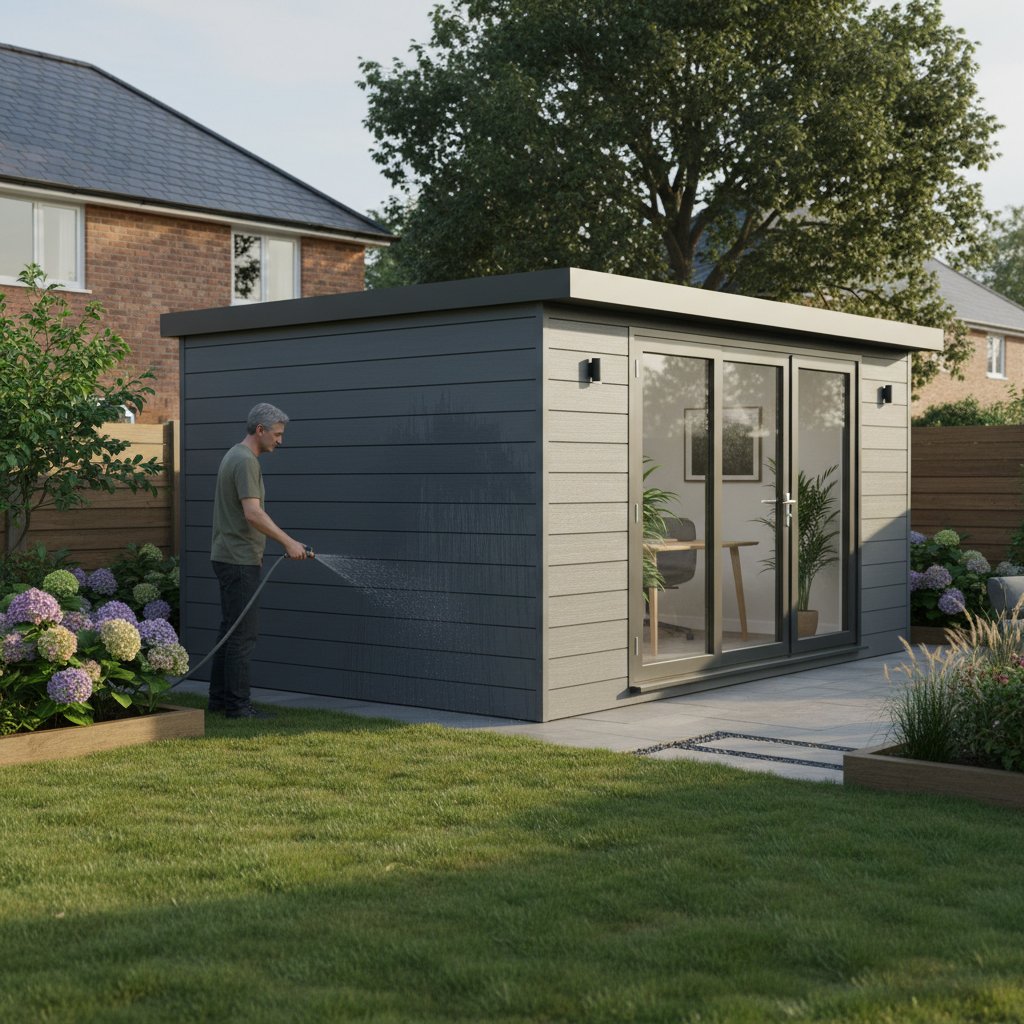
Warning: Never use a high-pressure jet wash on your modular building. The intense pressure can force water behind the cladding ventilation gaps or damage the delicate rubber seals around windows and doors.
For best results, use a soft-bristled brush, a standard garden hose, and a mild, non-abrasive detergent (such as diluted dish soap). Gently scrub the panels from top to bottom and rinse thoroughly. If you notice scratches or impact damage from garden machinery, contact us us for touch-up kits. Addressing a scratch early prevents the surface finish from degrading further, maintaining the aesthetic appeal of your commercial studio or retail unit.
Glazing, Seals, and Hardware
The P300/P400/P600 modular range uses premium double-glazed uPVC windows and external doors with multi-point locking systems. These components are vital for both security and thermal performance. Because these units are heavy and feature complex mechanisms, they require annual lubrication.
- Mechanical Lubrication: Use a light machine oil (like 3-in-1) or a silicone spray on all moving parts, including hinges, bolts, and the locking strip. Avoid WD-40 for long-term lubrication as it can dry out and attract grit.
- Weep Holes: Open your windows and look at the bottom of the frame track. You will see small drainage holes. Ensure these are not blocked by dust or dead insects, as they allow rainwater to escape the frame.
- Gasket Inspection: Check the black rubber gaskets around the glass. If they become brittle or start to pull away at the corners, they may need reseating or replacement to prevent drafts.
- Double Glazing Integrity: Look for "blown" units—internal condensation between the two panes of glass. While rare in new installations, this indicates a seal failure that requires a professional pane replacement (typically £150–£300 depending on size).
Managing Air Quality and Condensation
Modern Modular buildings are highly insulated and airtight, which is excellent for energy bills but requires active management of internal humidity. Moist air from breathing, coffee machines, or drying clothes can become trapped, leading to surface condensation on cold spots.
To maintain a healthy environment in your garden gym or office, utilise the trickle vents on the windows. Even in winter, these should remain open to allow a constant, low-level exchange of air. If your unit includes air conditioning, ensure the filters are vacuumed every three months to maintain efficiency. During the winter, we recommend keeping the building at a minimum base temperature of 10-12°C. This prevents the internal finishes from becoming cold enough to allow moisture to settle. Finally, ensure furniture is placed with a small gap (20-50mm) against external walls to allow air to circulate freely behind it.
Floor and Internal Finishes
The internal environment of an Adacon building is designed to be as low-maintenance as a modern residential home. Our standard laminate flooring is durable and easy to clean, but it is not waterproof. Use a "damp-dry" mop rather than a soaking wet one, as excessive water can seep into the joins and cause the edges to swell.
As the building settles into its site over the first 12 months, you may notice very minor hairline cracks in the sealant at the corners of the ceiling or skirting boards. This is normal for all new-build structures (including traditional homes) and can be easily remedied with a bead of flexible decorators' caulk and a touch of emulsion. Every six months, check that your LED lighting panels are flush and that sockets remain secure, especially in high-traffic site welfare units.
Groundworks and Base Integrity
While Adacon provides the building, the customer is responsible for the prepared level base. The longevity of the building depends on this base remaining stable. Periodically check the perimeter of your building to ensure that soil, mulch, or decorative gravel hasn't built up against the bottom rail of the steel frame. There should be a clear air gap or a defined boundary to prevent moisture from being held against the structure.
If your building is raised on a plinth or screw piles, look underneath (if accessible) to ensure no debris has accumulated that might block ventilation or provide a home for pests. If you notice the building seems unlevel—evidenced by doors beginning to stick or catch—this usually indicates ground movement rather than a fault with the module itself. In such cases, the base may need adjustment by your original groundworks contractor.
Service Connections and Safety
Your modular building is a complex electrical installation. The P600 comes pre-wired with sockets and lighting, connected to an internal consumer unit. For safety, you should test the RCD (Residual Current Device) buttons on your consumer unit monthly to ensure they trip as intended. Similarly, test any smoke or heat alarms integrated into the unit.
Visually inspect the point where the main armoured cable enters the building. Ensure the glanding is tight and that there are no signs of weathering or rodent damage to the cable. While the internal wiring is protected, we recommend an Electrical Installation Condition Report (EICR) every 5 to 10 years, performed by a qualified electrician, to ensure the system remains compliant with UK wiring regulations (BS 7671).
The Seasonal Maintenance Calendar
To make maintenance manageable, we suggest following this simple seasonal schedule:
- Spring: Perform a full external wash-down. Inspect window and door seals for any damage caused by winter frosts. Clear any algae growth from the cladding.
- Summer: Lubricate all hinges and locks. If you have air conditioning, clean the filters and check the external condenser unit for obstructions.
- Autumn: The most important season for drainage. Clear the roof and gutters of leaves. Check that the external lighting is working correctly for the darker months.
- Winter: Monitor internal humidity levels. Ensure the heating system is functioning efficiently and that the building is not dropping below the recommended base temperature overnight.
Protecting Your Warranty
Adacon provides a robust warranty on the structural integrity and finishes of our modules. However, this warranty is often contingent on the owner performing basic "reasonable maintenance." By keeping a simple logbook of when you cleaned the gutters or lubricated the locks, you provide evidence of good stewardship should a claim ever arise.
If you intend to make modifications—such as mounting heavy equipment to the walls, adding new electrical circuits, or changing the external finish—always contact the Adacon team first. Unauthorised modifications can void your warranty. If you ever spot something concerning, such as a leak or a structural shift, do not wait for the annual check; contact us immediately to prevent a minor issue from becoming a costly repair. Whether you are managing a single garden room or a multi-module clubhouse, a small investment in time each year will protect your investment for decades to year.
Design yours online — free
You can lay out a buying guides project yourself in a few minutes with the free Adacon P600 configurator: arrange the modules in 3D, pick your windows, doors and cladding colours wall by wall, and see an estimated price straight away. There is no obligation and no salesperson — save the design and we will pick it up from there.
Prefer to talk it through? Request a free quote and we will come back with a specification and price for your project.
At a glance
| Feature | Adacon P600 (Steel Modular) | Traditional Timber Garden Room |
|---|---|---|
| Structural Treatment | None required | Annual staining/preservative |
| Rot/Insect Risk | Zero risk to frame | High if not maintained |
| Roof Maintenance | Clearing debris from flat roof | Replacing felt or shingles every 5-10 yrs |
| Warping/Shrinking | None (Steel is stable) | Common as wood 'breathes' |
| Cleaning Requirement | Occasional soap and water | Sanding and recoating |
Frequently asked questions
Written by Adacon
Adacon UK designs, manufactures and delivers bespoke modular buildings across the UK for residential, commercial, education, hospitality, leisure and specialist applications. Buildings are designed around the space and use required: several standard module sizes are available, modules are joined side by side or stacked to form larger buildings, and bespoke configurations are considered where a project needs them — from garden rooms and offices to homes, classrooms, clubhouses, cafés, welfare facilities and two-storey buildings.