Garden Office VAT Reclaim UK: A Modular Building Tax Guide
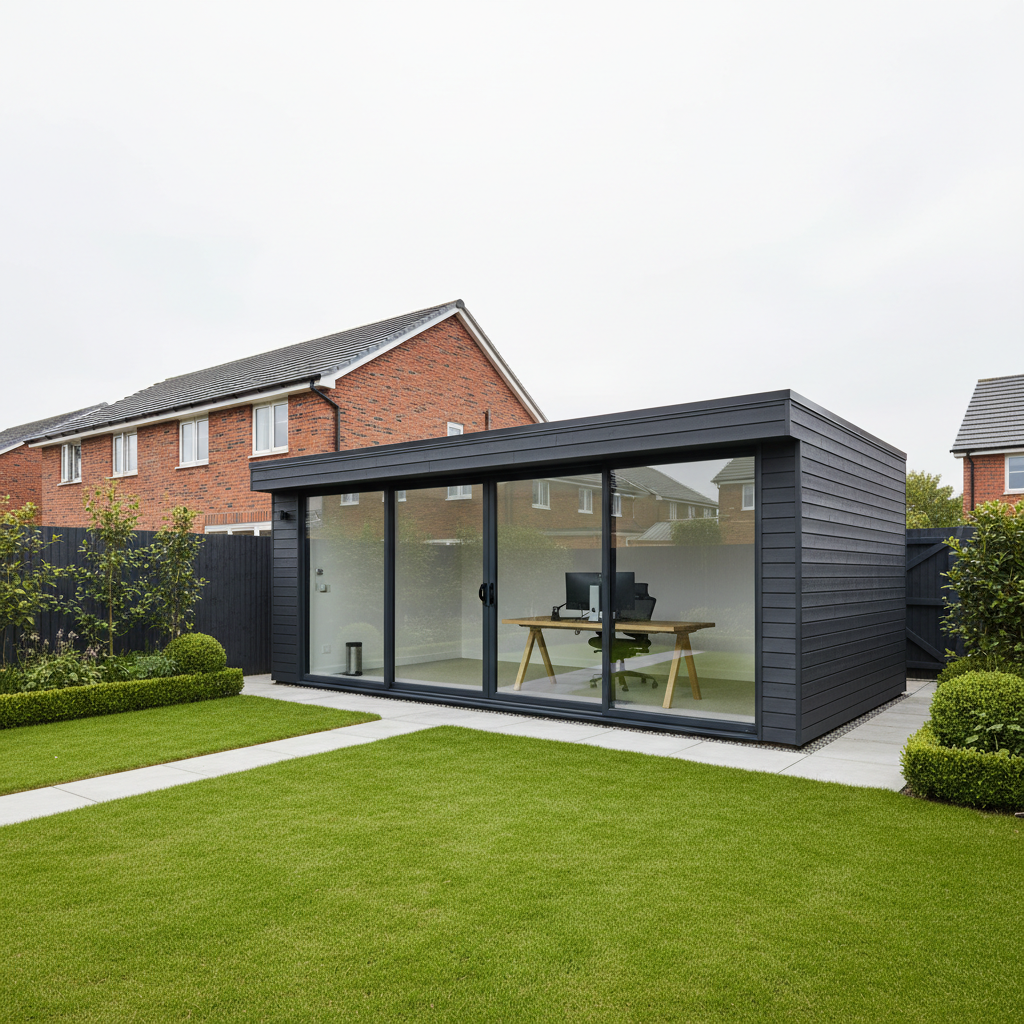
TL;DR
UK limited companies can typically reclaim the 20% VAT on a modular office purchase if the business is VAT-registered and the unit is used exclusively for business. While the structure itself generally doesn't qualify for Capital Allowances, internal fit-outs like electrical wiring, LED lighting, and climate control often do. Always consult a tax professional to ensure compliance with HMRC’s 'benefit in kind' rules.
Navigating the financial landscape of business expansion requires a clear understanding of tax efficiencies, particularly when investing in physical infrastructure. For UK limited companies, the potential for Garden Office VAT Reclaim and capital allowances makes Modular buildings an increasingly attractive alternative to traditional office leases. As a UK modular buildings supplier, Adacon provides precision-engineered steel-framed units that serve a wide range of commercial functions, from garden offices and studios to large-scale modular classrooms and site welfare blocks.
Understanding VAT Recovery on Modular Buildings
For a VAT-registered business, the ability to reclaim the 20% VAT on a capital purchase can significantly lower the net cost of the investment. However, HMRC applies strict criteria to ensure the building is a legitimate business asset rather than a personal home improvement. The primary condition for VAT recovery is that the modular building must be used exclusively for the purposes of the business.
When purchasing a system like the Adacon Adacon P600, the VAT invoice must be issued directly to the VAT-registered entity (the Limited Company or LLP) rather than an individual director. If the building is intended for a mixed-use scenario—for example, a workspace during the day and a cinema room for the family at the weekend—HMRC may challenge the full VAT reclaim. In such cases, businesses must either refrain from reclaiming VAT or apportion the claim to reflect the percentage of business use, though the latter is complex and often invites scrutiny.
Adacon’s modular system is distinct from permanent brick-and-mortar extensions. Because our units, such as the P600 with its external footprint of 12.98 m², are non-permanent steel-framed structures, they are often classified as "chattels" or plant and machinery in specific commercial contexts. This distinction is vital; whereas a permanent extension to a domestic dwelling is almost always seen as an enhancement to the private residence, a standalone modular unit is more easily defined as a business-only asset.
The 'Exclusive Business Use' Requirement
HMRC's stance on "duality of purpose" is the most common hurdle for directors seeking a garden office VAT reclaim in the UK. To successfully defend the business's position, the module should ideally be situated in a way that clearly separates it from the living quarters. This is why many of our commercial clients, including those setting up beauty salons or consultation rooms, ensure the unit has its own dedicated entrance or is positioned specifically to prevent through-traffic from the main home.
If an officer deems there is significant private use, this triggers a "Benefit in Kind" (BIK) charge. A BIK is a tax on employees or directors who receive perks from their company that aren't included in their salary. If the company pays for a building that the director uses personally, the director may be taxed on the value of that benefit, and the company will be liable for Class 1A National Insurance contributions. To mitigate this, companies should maintain a formal board minute documenting the business necessity of the module and a policy prohibiting personal use.
It is also worth noting the difference between VAT schemes. Businesses on the Flat Rate Scheme generally cannot reclaim VAT on goods unless the single invoice for capital goods is for £2,000 or more (including VAT). For most Adacon configurations, such as a fully specified P600 with premium cladding and glazing, the cost will comfortably exceed this threshold, allowing Flat Rate users to potentially reclaim the VAT despite their simplified accounting method. Standard scheme users simply reclaim the VAT through their quarterly return as they would with any other major business purchase.
Capital Allowances and the P600 Module
While VAT recovery deals with the 20% sales tax, Capital Allowances address how the cost of the building reduces your Corporation Tax bill. Under current UK tax law, the "shell" or structure of a building is generally not qualifying expenditure for Capital Allowances, as it is considered "premises" rather than "plant." However, modular buildings occupy a nuanced middle ground.
The Annual Investment Allowance (AIA) allows businesses to deduct 100% of the cost of qualifying plant and machinery from their profits before tax, up to a limit of £1 million per year. While the steel frame itself might be excluded, the "integral features" of an Adacon unit often qualify. These include:
- Electrical systems, including LED lighting and power sockets.
- Heating and air conditioning systems.
- Water heating and sanitary ware (if configured with a WC or kitchenette).
- Thermal insulation (in some specific commercial contexts).
When calculating tax valuations, it is important to distinguish between the space occupied and the space utilized. The Adacon P600 has an external footprint of 12.98 m². However, due to the high-performance insulated walls, the approximate usable internal area is 11.4 m² before any internal partitions are added. Accountants will use these specific metric measurements to determine the value of the asset on the balance sheet and to calculate the proportion of the project cost that qualifies for AIA.
Corporation Tax and Running Costs
Beyond the initial purchase, the ongoing operation of a modular building provides several avenues for Corporation Tax relief. All revenue expenditure—costs incurred solely for the purpose of earning business profits—is deductible. This includes:
- Utilities: If the unit is sub-metered, the business can pay for electricity and heating directly. If it is connected to a residential supply, the business must calculate a fair and reasonable apportionment of the bills.
- Business Rates: While many small garden offices fall under the threshold or qualify for Small Business Rates Relief, any rates paid are a fully deductible business expense.
- Repairs and Maintenance: Costs to keep the unit in good order, such as cleaning, painting, or servicing air conditioning units, are deductible.
- Connectivity: The installation of a dedicated business broadband line or phone system into the module is a clear business expense.
By shifting these costs from the individual to the Limited Company, the business reduces its taxable profit, effectively saving 19% to 25% (depending on the current Corporation Tax rate) on every pound spent on the module’s upkeep.
Planning Permission and Business Rates
A common misconception is that modular buildings never require planning permission. While many garden rooms fall under "Permitted Development," this usually applies only to incidental residential use. Using a module for a full-time business, especially one that involves visiting clients or employees, may constitute a "material change of use" for the land.
From a tax perspective, if the Valuation Office Agency (VOA) identifies that a portion of a residential property is being used exclusively for business, they may move that portion from Council Tax to Business Rates. For many, this is actually a benefit; Small Business Rates Relief often results in a 100% discount for properties with a rateable value of £12,000 or less, meaning the business pays £0 in rates, while the residential Council Tax for the main house may potentially be reduced (though this is rare).
We always advise clients to consult their local authority before installation. Whether you are installing a single unit for a home gym (personal use) or a 6.9m P700 as a security cabin (commercial use), the footprint and intended use will dictate the planning and rating requirements. Clear planning status also makes the garden office VAT reclaim process more robust, as it provides evidence of the unit's intended commercial function.
Capital Gains Tax (CGT) Implications
Homeowners in the UK benefit from Private Residence Relief (PRR), which means they do not pay Capital Gains Tax when they sell their main home. However, if a part of the property is used exclusively for business, that specific portion may be liable for CGT when the property is eventually sold.
This is where the relocatable nature of the Adacon system provides a strategic advantage. Because our modules are built on a galvanised steel chassis and are not fixed to the ground with deep strip foundations, they can often be classified as "tangible moveable property." If the building is sold separately from the house or relocated to a new site when the owner moves, it may not trigger the same CGT complications as a permanent brick-and-mortar office would.
If the unit remains and the house is sold, the gain is calculated based on the proportion of the plot occupied by the office. Given that a P600 occupies an external footprint of 12.98 m², this is usually a very small percentage of the overall property value, but it is a factor that should be discussed with a tax advisor during the planning phase.
Modular Steel Frames vs. Traditional Conversions
Adacon is a dedicated modular building supplier; we do not sell converted shipping containers. This distinction is important for both longevity and accounting. Traditional timber-framed garden rooms or shipping container conversions often have different depreciation schedules and insurance profiles.
Our units use a standardised P-series system (P300 through to P700), featuring galvanised steel frames and high-grade insulation. In a commercial setting, such as site offices or marketing suites, these are treated as robust business assets. The standard inclusions—such as the consumer unit, LED lighting, and power sockets—are all part of the integrated asset value.
The durability of the steel chassis means these buildings have a longer commercial life than many timber alternatives, and their ability to be moved or joined together (side-by-side or in L-shapes) allows the asset to grow with the company. For a business, this relocatability is a key factor in asset disposal and "Work in Progress" valuations, as the building can be sold on the secondary market more easily than a fixed structure.
Budgeting with the P600 P600 configurator
To accurately assess the tax implications and budget for a project, businesses need precise figures. The Adacon free P600 configurator allows commercial buyers to design a unit in 3D, selecting the exact placement of windows, doors, and cladding types. This provides an instant estimated price, which is essential for board approvals and initial discussions with accountants.
When using the configurator, remember that the estimated price typically covers the module itself with standard inclusions like the galvanised steel chassis and insulated panels. Transport, groundworks, and final electrical/drainage connections are quoted separately. For accounting purposes, separating the "unit cost" (the capital asset) from the "site preparation" (which may be treated differently for tax) is a standard practice that our itemised quotations support.
Whether you are a homeowner seeking a professional workspace or a contractor looking for a multi-unit welfare block, understanding the interplay between VAT, Capital Allowances, and Corporation Tax is the first step toward a successful modular project. By selecting a high-spec, steel-framed system, you are investing in a business asset designed for professional performance and long-term tax efficiency.
Design yours online — free
You can lay out a buying guides project yourself in a few minutes with the free Adacon P600 configurator: arrange the modules in 3D, pick your windows, doors and cladding colours wall by wall, and see an estimated price straight away. There is no obligation and no salesperson — save the design and we will pick it up from there.
Prefer to talk it through? Request a free quote and we will come back with a specification and price for your project.
Cost breakdown
| Module Type | External Footprint | Approx. Usable Internal Area | Standard Features |
|---|---|---|---|
| P300 | 6.38 m² | 5.4 m² | Steel chassis, insulation, door, LED lighting, sockets |
| P600 | 12.98 m² | 11.4 m² | Steel chassis, insulation, door, LED lighting, sockets |
| P700 | 15.18 m² | 13.4 m² | Steel chassis, insulation, door, LED lighting, sockets |
Pros
- • 20% VAT recovery for registered limited companies
- • Potential for 100% tax relief on internal 'integral features'
- • Running costs (heat/light) are deductible business expenses
- • Adacon modules are relocatable assets, not permanent fixtures
Cons
- • Potential Benefit in Kind charges if used for personal purposes
- • Structure itself usually ineligible for Capital Allowances
- • Possible impact on Capital Gains Tax when selling your home
- • Requirement for a separate business electricity meter or complex apportionment
Frequently asked questions
Written by Adacon
Adacon UK designs, manufactures and delivers bespoke prefabricated modular buildings across the UK — factory-built off-site and delivered fitted out — for residential, commercial, education, hospitality, leisure and specialist applications. Buildings are designed around the space and use required: several standard module sizes are available, modules are joined side by side or stacked to form larger buildings, and bespoke configurations are considered where a project needs them — from garden rooms and offices to homes, classrooms, clubhouses, cafés, welfare facilities and two-storey buildings.